




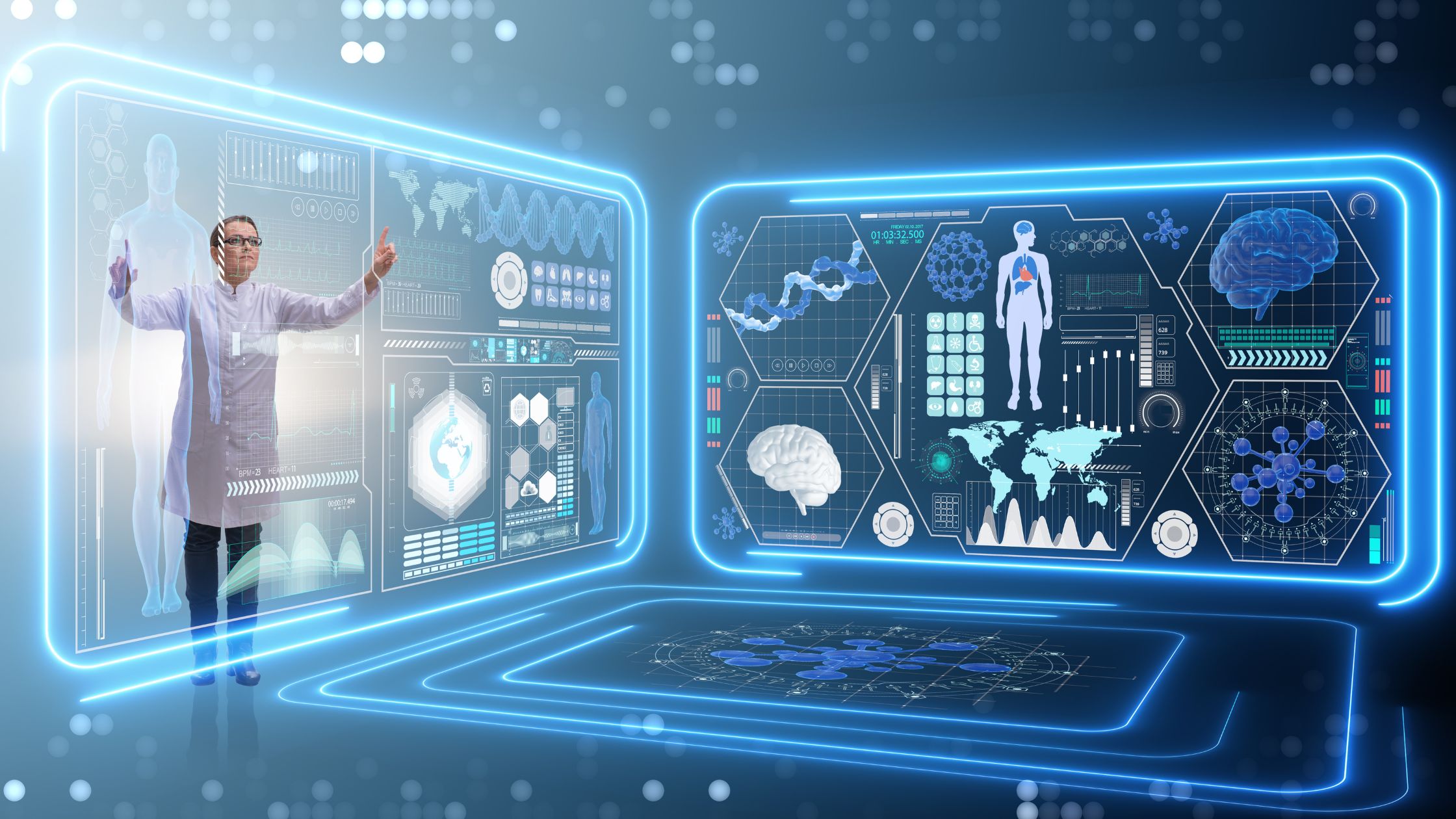
The way the world views medicine is changing as a result of the convergence of artificial intelligence (AI) and healthcare. AI-powered healthcare software development is revolutionizing patient care and medical efficiency in previously unthinkable ways, from robotic operations and virtual health aides to predictive diagnostics and individualized treatment programs.
As healthcare providers, startups, and enterprises continue to embrace digital transformation, AI healthcare software has become a crucial driver of innovation, accuracy, and accessibility in medicine. In this article, we’ll explore how AI is transforming modern healthcare, the real-world applications leading this revolution, and what the future holds for AI-driven medical solutions.
The Growing Role of AI in Healthcare Software
Artificial Intelligence has transitioned from a futuristic concept to a fundamental component of healthcare software. AI-powered tools are now helping doctors analyze data faster, make more informed decisions, and provide proactive treatment — all while enhancing the overall patient experience.
Healthcare software development companies are integrating AI capabilities into electronic health records (EHRs), mobile health apps, and diagnostic systems to reduce errors, save time, and improve precision.
Key advantages of AI in healthcare software include:
- Faster and more accurate diagnostics
- Real-time patient monitoring
- Automated data entry and analysis
- Improved resource management in hospitals
- Enhanced patient engagement and personalization
AI is no longer just assisting healthcare professionals — it’s becoming a co-pilot in clinical decision-making.
Predictive Analytics: From Reaction to Prevention
Traditionally, healthcare has been reactive — treating patients after symptoms appear. AI is changing that narrative by making healthcare predictive and preventive.
Through AI-driven predictive analytics, healthcare software can analyze patient histories, genetic data, and lifestyle factors to predict potential health risks before they become severe. This allows doctors to take preventive measures and recommend lifestyle changes tailored to each individual.
Example use cases:
- Predicting the likelihood of heart attacks or strokes
- Forecasting disease progression in chronic conditions like diabetes
- AI-based early cancer detection through image recognition
Predictive AI tools not only improve patient outcomes but also reduce healthcare costs by minimizing hospital readmissions and unnecessary treatments.
AI-Powered Diagnostics and Medical Imaging
One of the most impactful applications of AI in healthcare software lies in diagnostics and imaging. Advanced AI algorithms can now analyze medical images — such as MRIs, X-rays, and CT scans — with a precision that rivals, and sometimes exceeds, human specialists.
AI-powered diagnostic software uses deep learning to detect abnormalities in real time, helping doctors identify diseases earlier and with greater confidence.
Leading innovations include:
- AI tools that detect tumors or fractures from scans
- Automated image segmentation for radiology
- Machine learning models for ophthalmology and pathology
With these capabilities, healthcare is moving toward faster, data-backed diagnostics, enabling physicians to focus more on patient care rather than manual analysis.
Personalized Medicine with Machine Learning
Every patient is unique — and so should be their treatment. Machine learning (ML) enables healthcare software to personalize care plans based on individual genetics, medical history, and lifestyle data.
ML-powered healthcare apps can now recommend specific treatments, diet plans, or medications tailored to each patient’s condition and genetic profile.
Examples include:
- Personalized oncology treatment based on tumor genomics
- AI-powered mental health apps recommending therapies based on user behavior
- Adaptive learning algorithms that track patient recovery progress
This personalized approach ensures higher treatment success rates and improves patient satisfaction and engagement.
Virtual Health Assistants and AI Chatbots
The rise of AI healthcare chatbots and virtual assistants has made healthcare services more accessible than ever. Patients can now receive instant medical advice, schedule appointments, or track prescriptions through conversational AI interfaces.
These AI assistants are integrated into mobile apps and hospital systems to offer real-time support — reducing administrative workload for medical staff while improving patient communication.
Capabilities of AI-powered virtual assistants include:
- 24/7 symptom checking and triage
- Medication and appointment reminders
- Post-treatment care instructions
- Multilingual patient support
AI chatbots are not replacing doctors — they’re enhancing healthcare accessibility and freeing up professionals to focus on complex cases.
Robotic Process Automation (RPA) in Healthcare
Behind the scenes, healthcare systems rely heavily on data — from billing and insurance to claims processing and patient management. Robotic Process Automation (RPA) powered by AI is streamlining these repetitive, manual processes.
AI-enabled RPA bots handle administrative tasks such as:
- Patient data entry and verification
- Insurance claims management
- Appointment scheduling and billing
This reduces human error and operational costs, allowing hospitals and clinics to operate more efficiently while maintaining data accuracy and compliance.
Remote Patient Monitoring with IoT and AI
In 2025, AI and the Internet of Things (IoT) are together creating a powerful ecosystem for continuous patient monitoring.
AI healthcare apps connected to wearable devices and sensors track patient vitals in real time — such as heart rate, oxygen levels, or glucose readings — and alert doctors if anomalies are detected.
Examples include:
- Smartwatches tracking heart rhythm irregularities
- AI-integrated glucose monitors for diabetic patients
- Cloud-connected monitoring platforms for elderly care
This trend not only improves patient outcomes but also empowers patients to take control of their health outside clinical settings.
Data Security and Compliance Through AI
As healthcare becomes increasingly digital, data security and compliance are more important than ever. AI plays a vital role in safeguarding sensitive medical information by detecting cyber threats and ensuring compliance with healthcare regulations like HIPAA and GDPR.
AI-driven security features include:
- Threat detection and anomaly monitoring
- Automated encryption and access control
- Blockchain-integrated data validation
By combining AI with blockchain and cloud security, healthcare software can maintain data integrity and patient trust across platforms.
Accelerating Drug Discovery and Clinical Research
AI is transforming pharmaceutical research by drastically reducing the time and cost involved in drug discovery. Advanced algorithms can simulate molecular interactions, analyze clinical trial data, and identify promising compounds faster than traditional methods.
AI-driven healthcare software now assists in:
- Predicting drug efficacy and safety
- Optimizing clinical trial designs
- Accelerating regulatory approval processes
This has opened doors to faster innovation in precision medicine, leading to more effective and targeted therapies.
The Future of AI Healthcare Software Development
The future of medicine lies in collaboration between technology and human expertise. As AI healthcare software development continues to evolve, we can expect systems that are more adaptive, transparent, and patient-centric.
The next generation of healthcare solutions will be powered by:
- Generative AI for diagnostics and care recommendations
- Multimodal AI combining imaging, genomics, and EHR data
- Predictive population health analytics
- AI-driven virtual hospitals and smart healthcare ecosystems
AI isn’t replacing healthcare professionals — it’s amplifying their capabilities, ensuring better outcomes, lower costs, and equitable access to quality care.
Conclusion
Artificial Intelligence has moved beyond innovation; it’s now an essential part of modern medicine. Through intelligent healthcare software, AI is helping save lives, optimize treatments, and make healthcare more human-centered.
The ongoing AI revolution in healthcare represents not just technological progress, but a fundamental shift toward personalized, data-driven, and accessible medicine — a future where every patient receives the right care at the right time, powered by intelligent technology.